
Best Places to Visit in Pushkar: Temples, Ghats & the Bazaar
Few places in India carry a story as layered as Pushkar's. Built around a spring-fed lake and cradled by the Aravalli ranges, this small Rajasthan town fits ghats, ancient temples, a lively bazaar, and one of India's most colourful fairs into a space you can cross on foot. This guide covers the best places to visit in Pushkar and helps you plan it all, from where to go and when, to how to get there and where to rest.


An Overview of the Divine Pushkar Lake Town
Pushkar Lake is an artificial lake, created in the 12th century when a dam was built across the headwaters of the Luni River, and it holds about 22 hectares of water at a depth of 8–10 metres. Yet local legend tells of a far more magical beginning. When Lord Brahma dropped a lotus on the desert floor, a lake rose where it touched down, and the town's name is often traced back to that ‘flower in hand’. Today, Pushkar packs an unusually dense cluster of attractions into a town that can be crossed on foot.
The lake sits at the centre of it all, ringed by ghats, temples, and a busy market street. Most visitors start at the water, then work outward toward the Brahma Temple and the hilltop Savitri Mata shrine, while shopping and street food fill the gaps between sights, especially along the main bazaar road. Better still, with Pushkara Resort & Spa a short drive away, most attractions in Pushkar can be covered comfortably in a single day. So let's begin at the water's edge.
Pushkar Lake & Its 52 Ghats: A Sacred Cluster of Attractions in Pushkar
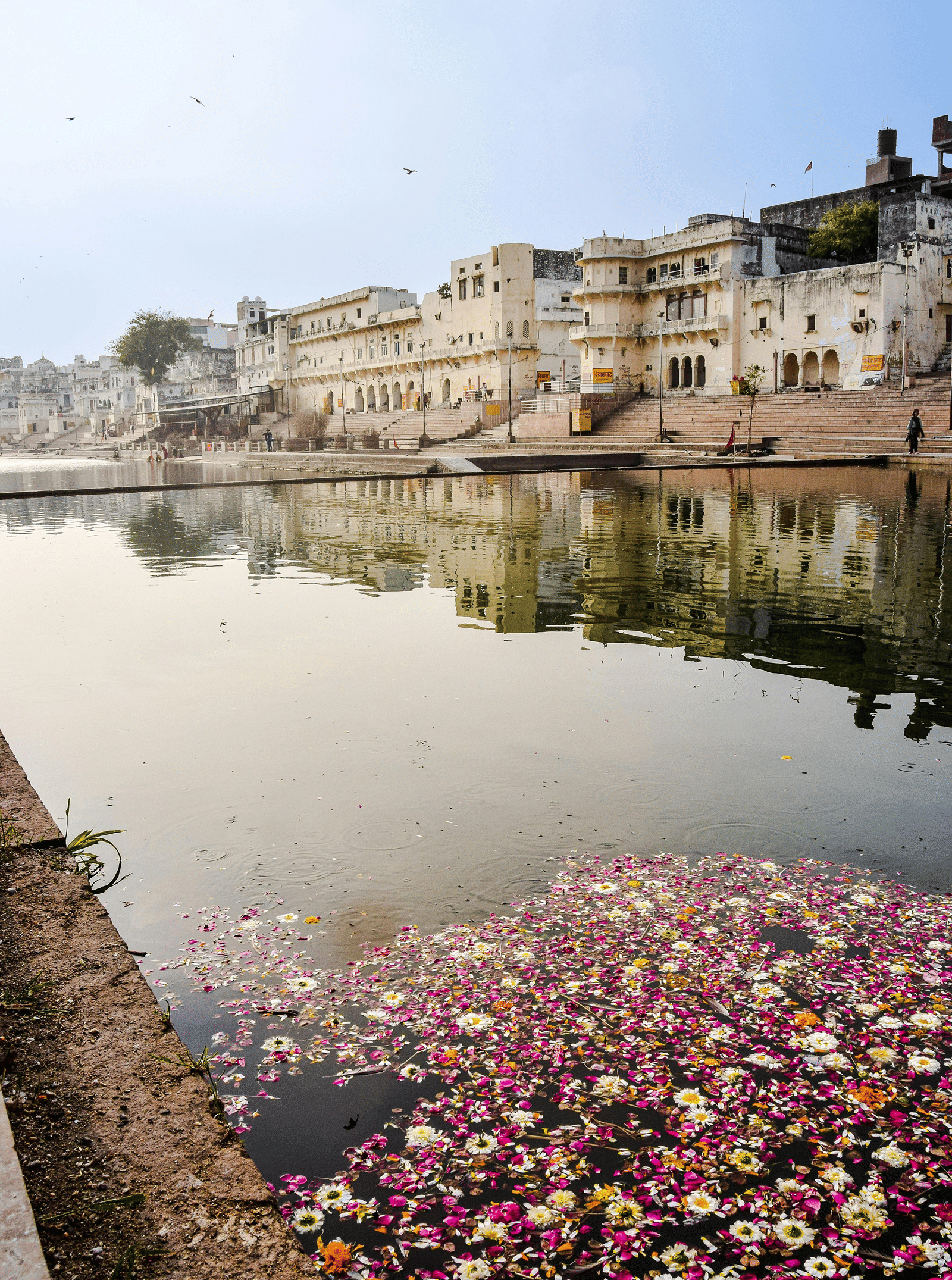
Picture the lake at sunrise: the town still asleep, the water soft and still, and a few early pilgrims making their way down the steps. Pushkar Lake is considered one of Hinduism's most sacred bathing sites, and each of its 52 ghats (flights of steps leading to the water) was built by a different royal family or patron over the centuries. Pilgrims gather at several ghats for the evening aarti, a ritual of lamps, chanting, and flowers. Sunrise Stroll: Quiet, golden, and ideal for photographs, or simply for a few moments of stillness before the day begins.
- Evening Aarti: At Varah Ghat, lamps, chanting, and flowers come together at around 7 pm in summer and 5:30 pm in winter
- Kartik Purnima: Legend says 33 million gods and goddesses descended on this night to consecrate the lake, which is why pilgrims gather here for a holy dip
- Good to Know: Photography rules vary from ghat to ghat, so a quick look at the signs keeps everyone comfortable


Jagatpita Shri Brahma Mandir: One of India's Few & Worth the Pause
The Brahma Temple in Pushkar is easy to spot from a distance by its red spire, rising above the rooftops like a quiet landmark. Inside, look for the swan, the bird sacred to Brahma, and for silver coins set into the marble, along with a silver turtle on the floor. Its origins trace back centuries, with the present structure rebuilt and maintained over generations by royal patrons. Temples dedicated to the creator god are rare across India, which makes this one of the most revered Pushkar tourist places.
- Entry: Free, with modest dress expected
- Footwear and valuables: Shoes come off at the entrance, and bags and valuables usually go into a paid locker outside
- Time needed: Under an hour, so it pairs easily with the ghats.
Savitri Mata Temple & the Ropeway: A Sunset Worth Climbing for
High above the town, Savitri Mata Temple watches over the lake, the valley, and the Aravalli range beyond. Savitri is worshipped here as Brahma's consort, and as the sun lowers, the whole town glows in warm evening light.
- By ropeway: About 6 to 7 minutes to the top, a gentle option for families and elders
- On foot: Roughly 950 steps, which takes around 45 to 60 minutes up and 30 minutes down
- Best time: Sunset, but allow enough daylight to return, and any temples and ghats stay open until about 9 pm
- Monkeys: Troops live around the temple, so keep food out of sight and admire them from a distance
- Shorter alternative: The Pap Mochani Temple hike takes about half the time
- Alternative Temples: Rangji Temple, with its striking South Indian-style tower at the entrance to town, along with the Gayatri, Apteshwar, Mahadeva, and Raghunath temples, each with its own character and stories


Things to Do in Pushkar Bazaar: Silver, Spice & Everything Nice
The bazaar runs through the heart of town, lined with silver jewellery, textiles, leather goods, tie-dye fabrics, and semi-precious stones. Bargaining is part of the fun, and shopkeepers are often happiest to strike a deal early in the morning or late in the evening. Main Market and Safar Bazaar stay open into the night when the lanes fill with pilgrims and travellers. Pushkar is also a strictly vegetarian town, with no meat or alcohol, which is why its lakeside and rooftop cafes serve everything from Rajasthani snacks to international vegetarian dishes. The town is also known for its rose farming.
The Pushkar Camel Fair: A Quick Guide to the Festivities
Once a year, the desert comes alive. Held around Kartik Purnima, October or November, the Pushkar Camel Fair began over a century ago as a celebration of the full moon and has grown into one of Rajasthan's biggest festivals.
- Fairground Festivities: Camel parades, moustache contests, matka-tod competitions, folk performances, and even a bridal competition, all with plenty of street food
- For Adventurers: Camel safaris across the dunes and hot air balloon rides over the fair
- For a Special Stay: Luxury tents under the full moon


A Day Trip to Ajmer
Ajmer sits roughly 14 kilometres from Pushkar, close enough for an easy half-day excursion from the resort. The city is best known for the Ajmer Sharif Dargah, a major Sufi shrine visited by pilgrims of multiple faiths. Ajmer's own sightseeing deserves a dedicated guide, and our upcoming guide will take you beyond the Dargah, from Taragarh Fort to the shores of Ana Sagar Lake.
- Distance: About 14 km from Pushkar, making it an easy half-day escape
- Ajmer Sharif Dargah: The city's best-known landmark, a Sufi shrine visited by pilgrims of many faiths
- Taragarh Fort: A wonderful addition for views and history if time allows
- Ana Sagar Lake: A peaceful lakeside pause to end the outing
Best Time to Visit Pushkar: Best Season & How to Reach
Best Time to Visit
- October to March: Winter is the most comfortable season, with pleasant days (highs around 25°C) and cooler evenings
- May and June: The hottest months, with temperatures reaching around 46°C
- July and August: The monsoon brings most of the year's 400–600 mm of rain
- November: The busiest month, thanks to the Camel Fair and Kartik Purnima, so it's wise to book early


Travel Hubs for Your Journey to Pushkar
Pushkar is a small town with no major transport hub of its own, so the usual route is to reach a nearby hub and then do a last leg by road. Here is how that works.
- By Road: Pushkar Bus Station is about 4 km away
- By Rail: Pushkar Terminus is about 5 km away
- By Air: Kishangarh Airport is the nearest, about 33 km away. Jaipur International Airport, around 146 km, is the major airport serving the region
Pushkara Resort & Spa: A Calm Gateway to Your Pushkar Story
- Rooms: 9 categories of rooms, cottages, and luxury tents, designed with modern amenities and serene views, so your evenings are as restful as your days are full
- Dining: Qube Café serves a multi-cuisine buffet in a fine-dining setting, while Gravity Lounge offers modern-twist dishes in a relaxed, refined space
- Facilities: A landscaped lawn, a swimming pool, in-house sand dunes, and ample on-site parking, all set against the Aravalli foothills
- Meetings & Events: A business lounge for work on the go, plus venues for up to 3,000 guests, ideal for weddings and group gatherings
- Location: About 3 km from the bus stand, 6 km from the railway station, and 37 km from the Kishangarh Airport


Visit Pushkar and watch the lake glow at dawn, walk the ghats as the aarti begins, and climb to Savitri Mata for a sunset over the Aravallis. A day or two of Pushkar sightseeing, with a short detour to Ajmer, shows you the best of the town. When it's time to rest, book directly at Pushkara Resort & Spa, and reward yourself with a peaceful night in our comfortable rooms amid serene views.
Frequently Asked Questions (FAQs)
What are the best places to visit in Pushkar?
Pushkar Lake, the Brahma Temple, Savitri Mata Temple, and Pushkar Bazaar are the town's essential stops, each within walking distance from the other.
How many days are enough for Pushkar?
A single full day covers the lake, both temples, and the bazaar comfortably for most visitors. A second day helps if an Ajmer excursion or the Camel Fair season is part of the plan.
What is Pushkar famous for?
Pushkar is famous for its sacred lake, the rare Brahma Temple, and the annual Camel Fair each November. Its 52 ghats and centuries-old bazaar also draw visitors interested in Rajasthani culture and craft.
How far is Pushkar from Ajmer?
Pushkar sits roughly 14 kilometres from Ajmer, a drive of around 40 minutes depending on traffic. The 2 towns are often visited together, given how close they sit to each other.